
Chief Justice of India Surya Kant stated that while artificial intelligence (AI) can augment judicial reasoning, it cannot substitute judicial conscience, and a permanent apex body is proposed to supervise AI adoption and accountability within the judiciary.
Supreme Court Justice V Mohana recused herself from a 2016 Public Interest Litigation (PIL) seeking directions for the speedy disposal of criminal cases against lawmakers. This development follows a report by amicus curiae Vijay Hansaria, which revealed over 4,000 pending criminal cases against Members of Parliament (MPs) and Members of Legislative Assemblies (MLAs), including chief ministers from 14 states. The Supreme Court has previously issued directives to high courts to establish special benches to monitor and fast-track these trials.

The Calcutta High Court has granted interim protection from arrest to TMC MP Abhishek Banerjee in three FIRs, expressing frustration over the numerous cases against him. The court directed police not to take coercive action until November 30 and questioned the motive behind the complaints, noting they were filed by a political rival.

Bar Council of India (BCI) Chairman Manan Kumar Mishra has issued an apology to law students, particularly those from NALSAR, for any hurt caused by the recent controversy surrounding their convocation and enrolment, urging them to make independent decisions.

A new Class 9 NCERT textbook describes the judiciary as an "impartial and independent institution" that safeguards citizens' rights and upholds the Constitution, contrasting with a previous Class 8 textbook that sparked controversy over its depiction of judicial corruption. The new textbook was prepared before the Class 8 controversy erupted.

The NCERT Class 8 social science textbook has undergone significant revisions, including a tweaked narrative on the 1947 Partition, the inclusion of VD Savarkar's demand for Swaraj, and the removal of references to Adolf Hitler and Nazi ideology. These changes follow a Supreme Court intervention regarding controversial content on the judiciary.

The Supreme Court of India has issued a strong warning against the use of "non-existent, fake, and hallucinated" judgements generated by artificial intelligence (AI), likening it to "the release of methyl Isocyanate in the province of law and justice: invisible, insidious, and catastrophic." The court set aside an NCLT verdict that relied on such AI-generated precedents.

The Supreme Court Bar Association has expressed deep concern over an Andhra Pradesh High Court judge reportedly sending a young advocate to judicial custody for a procedural lapse, urging the Chief Justice of India to take cognisance of the incident.
The Supreme Court has modified its previous order regarding three academics involved in a controversial NCERT textbook chapter on corruption in the judiciary, allowing government bodies to make independent decisions about their association with the academics.

The NCERT has issued a public apology and withdrawn a social science textbook for Class 8 after the Supreme Court objected to a chapter on judicial corruption. The court imposed a ban on further publication of the book.

The Madhya Pradesh government has challenged the legal validity of a 1935 order from the former Dhar princely state concerning the religious status of the Bhojshala Temple-Kamal Maula Mosque, arguing it cannot be considered law.

Zolqadr's appointment comes through a presidential decree, endorsed by Supreme Leader Mojtaba Khamenei.

The NCERT has apologised for 'inappropriate content' in a Class 8 textbook chapter discussing judicial corruption, following Supreme Court criticism. The textbook will be rewritten, and its circulation has been put on hold.

'My argument was straightforward: If the Constitution allows this reservation and SC/ST and OBC candidates are already getting reservation in private institutions -- backed by Constitution Bench orders -- then not extending the same to EWS candidates directly violates the 103rd Amendment and Article 14, which guarantees the right to equality.'

IIT-Gandhinagar is reviewing Michel Danino's position as guest professor after the Supreme Court directed institutions to disassociate from him due to a controversy over a chapter on judicial corruption in a withdrawn NCERT textbook.

Union Education Minister Dharmendra Pradhan has expressed strong disapproval of a chapter in an NCERT Class 8 textbook addressing judicial corruption, prompting government action and a Supreme Court ban on the book's circulation.
India continues to provide assistance to Nimisha Priya, an Indian nurse on death row in Yemen for the murder of a Yemeni citizen. The MEA is also in touch with friendly governments to find a solution. Reports claiming her death sentence has been revoked are incorrect.
The NCERT's class 8 textbook is under scrutiny for its content on judicial corruption, potentially leading to its removal after government concerns and objections from the judiciary.

The Karnataka Legislative Council passed a bill to curb hate speech, facing strong opposition from BJP and JD(S), who criticized it as 'draconian' and a threat to free speech. The bill proposes jail terms and fines for hate crimes and repeated offenses.

The CBI has filed a chargesheet against a man accused of defrauding a retired banker of Rs 23 crore in a sophisticated digital arrest scam involving impersonation of law enforcement and judicial authorities.
The capital punishment handed to Indian nurse Nimisha Priya by a Yemeni court has not been ratified by President Rashad al-Alimi, the West Asian nation's embassy said on Monday.
Nimisha Priya, an Indian nurse sentenced to death in Yemen for the alleged murder of a Yemeni national, faces imminent execution despite the payment of blood money. Despite the lack of bilateral ties between India and war-torn Yemen, family members and human rights activists are clinging to hope for a last-minute pardon. The family has raised funds through a crowdfunding campaign to cover legal fees and negotiations, and is prepared to pay any additional amount required. However, the execution order received presidential approval despite ongoing proceedings, leaving little time for intervention. Priya's family is burdened by debt and seeks urgent support from the Indian government to save her life.
Three academics involved in drafting a controversial NCERT textbook chapter on corruption in the judiciary have approached the Supreme Court to defend their work, stating it was a collective effort and not the view of any single individual.
An explainer on the process of how NCERT textbooks are prepared, in light of a recent controversy over a class 8 textbook chapter on 'judicial corruption' that led to a Supreme Court ban.

The verdict will have far-reaching implications for judicial service aspirants.
The apex court ordered that the Centre and state authorities comply with its directions immediately, and warned of 'serious action' if directions are defied in any form.

India is working with Yemeni authorities and friendly nations to find a solution for Nimisha Priya, the Indian nurse sentenced to death in Yemen for murder. The government is seeking more time for Priya's family to reach an understanding with the victim's family.

A Delhi court acquitted social activist Medha Patkar in a criminal defamation case filed by Delhi L-G V K Saxena, citing a lack of evidence from the prosecution.

The Grand Mufti said that in Islam, there is a law which allows the victim's family to pardon the murderer.
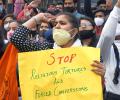
The Supreme Court has sought responses from the Centre and 12 states on a PIL challenging the validity of their anti-conversion laws. The National Council of Churches in India (NCCI) filed the PIL, seeking a stay on the operation of these laws.
The Centre has directed the NCERT to review all textbooks after the Supreme Court raised concerns about 'offending' content on corruption in the judiciary in a Class 8 social science book.
The Supreme Court of India has ruled that no timelines can be imposed on governors and the president to grant assent to bills passed by state assemblies, clarifying the extent of their powers under Article 200 of the Constitution.
The SCBA said Kishore's "reprehensible, disorderly and intemperate behaviour" amounted to "a direct assault on judicial independence" and "a serious breach of professional ethics, decorum and the dignity of the Supreme Court.
According to a statement issued by the Grand Mufti's office, the decision was made after a high-level meeting held in Yemen's capital, Sanaa, where it was decided to completely cancel the death sentence, which had been temporarily suspended earlier.

The Indian government is making every possible effort to save an Indian nurse facing execution in Yemen for murder, the Centre told the Supreme Court.

The Supreme Court has directed a Jharkhand-based lawyer to issue an unconditional apology to the High Court in a contempt case stemming from a viral courtroom exchange where he allegedly told a judge, "Don't cross the limit."
Kuwait has executed 25 Indian nationals in the past five years.
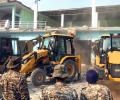
'The implementation of the judgment has largely been left to the discretion of the very executive authorities it sought to restrain.'

Private schools failing to provide these facilities risk de-recognition

It also aims to reduce the powers of the Supreme Court, with some authorities shifted to the proposed Constitutional Court, and immunity to the president from criminal proceedings for life.
